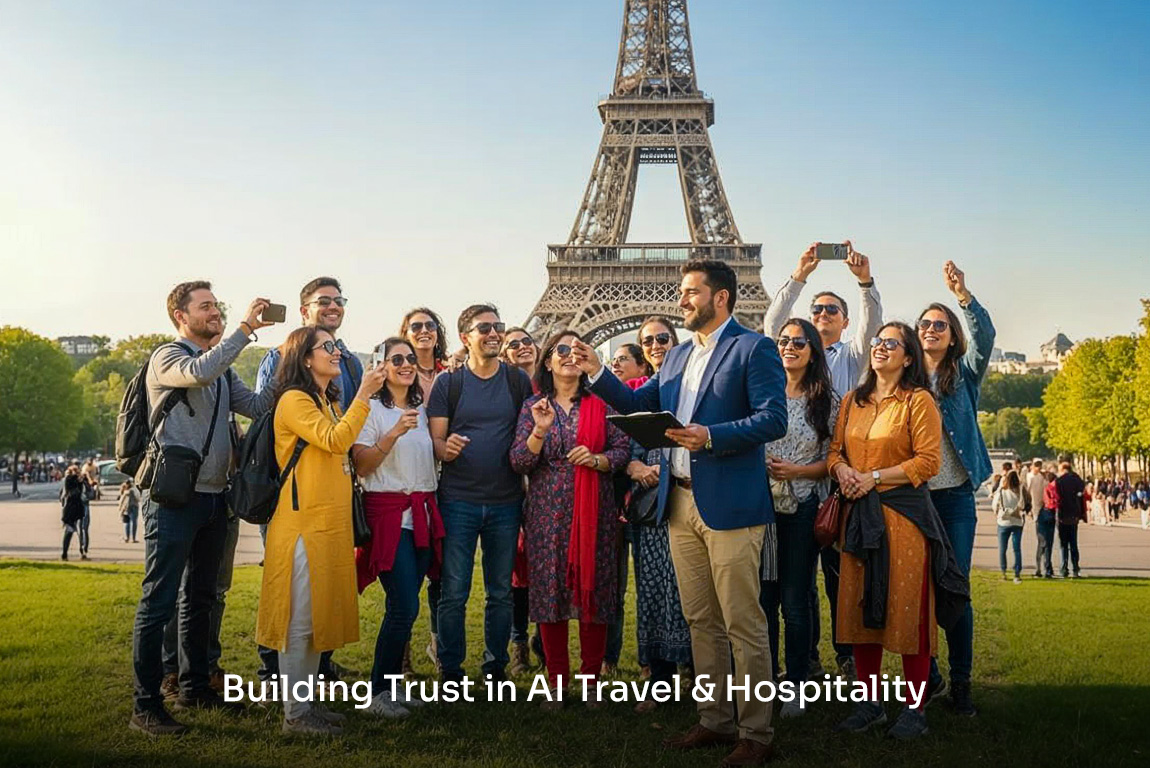
Strategic Shift: From “Looking Real” to “Proving Real”
To survive this era of misinformation, travel brands must evolve from performative authenticity (“we look real”) to provable authenticity (“we can prove we’re real”).
Here’s how the industry can adopt this paradigm.
1. Verified Testimonial Systems
Testimonials are the emotional backbone of travel marketing – but in the deepfake era, they require proof of origin.
- Blockchain Verification: Use platforms like Truepic or Content Credentials by Adobe to certify that photos, videos, and guest testimonials haven’t been manipulated.
- Digital Watermarks: Introduce a visible “Verified Authenticity” badge (like a nutritional label for truth) that confirms media provenance.
- Identity Linking: Tie every video testimonial to a verified human identity – e.g., booking confirmation or verified social media handle.
Imagine a resort testimonial where the clip carries a timestamp, geotag, and “Verified by Content Credentials” seal – proving the story is as real as the sunrise behind it.
2. Behind-the-Scenes Proof: The Unfiltered Lens
In a synthetic world, imperfection is your credibility badge.
- Share behind-the-scenes clips of guests recording their own experiences – candid, unedited, natural.
- Include timestamps, GPS metadata, and raw footage where possible.
- Show the people behind the brand – the chef preparing local cuisine, the guide leading a hike, the housekeeper decorating a room for a honeymoon couple.
“Unpolished is the new premium.” The more real your content feels, the more believable it becomes.
3. Real-World Anchors through UGC
User-Generated Content (UGC) is harder to fake – because it’s posted from real accounts, in real time.
- Encourage guests to post directly from their own profiles, tagging your brand.
- Use branded hashtags like #RealStayStories or #VerifiedExperiences.
- Aggregate these posts on your website with direct links to the original profiles – building a social web of trust.
Let your guests be your storytellers – not your marketing department.
4. Human-Led Storytelling: Imperfection as an Asset
As AI floods the web with synthetic beauty, real emotion becomes your most valuable currency.
- Spotlight founders, employees, and guests telling their personal stories – in their own imperfect voices.
- Tone of voice: human, transparent, and conversational.
- Celebrate your cultural roots, daily operations, and honest challenges.
“We don’t need a filter to make paradise look real.”
– A tagline that could become the hospitality industry’s anti-deepfake manifesto.
5. AI Transparency Policy
Transparency is the new trust signal.
If AI tools are used – even for minor editing – say so openly.
“AI helps us enhance visuals, but every story you see here is a real traveller, at a real destination.”
This kind of radical honesty fosters confidence, not skepticism.
Shifting Towards Verifiable Proof
Tomorrow’s travellers will not just trust testimonials – they’ll audit them.
Brands must adapt testimonial formats from emotion-driven quotes to data-backed mini case studies.
- Case Study Format: Replace “We had an amazing time!” with “Our bookings increased 35% after partnering with this tour operator.”
- Attach Evidence: Add screenshots, analytics reports, or verifiable metrics.
- Host Live Sessions: Use live-stream interviews or interactive Q&A with real travellers instead of scripted video testimonials.
The less “produced” your content looks, the more authentic it feels.
Third-Party Validation: Borrowed Trust Still Matters
Independent platforms like TripAdvisor, Google Reviews, G2, or Trustpilot are gaining new relevance.
They offer fraud detection, verified identities, and moderation – features that single brands can’t easily replicate.
- Always link to original review sources on trusted platforms.
- Encourage satisfied travellers to connect their testimonials with professional profiles (LinkedIn, Instagram, etc.) for added credibility.
In the Deepfake Era, trust shifts from the person on screen to the platform they’re verified on.
The Future of Trust in Travel Marketing